|
History of our Family
A Very Rare Family
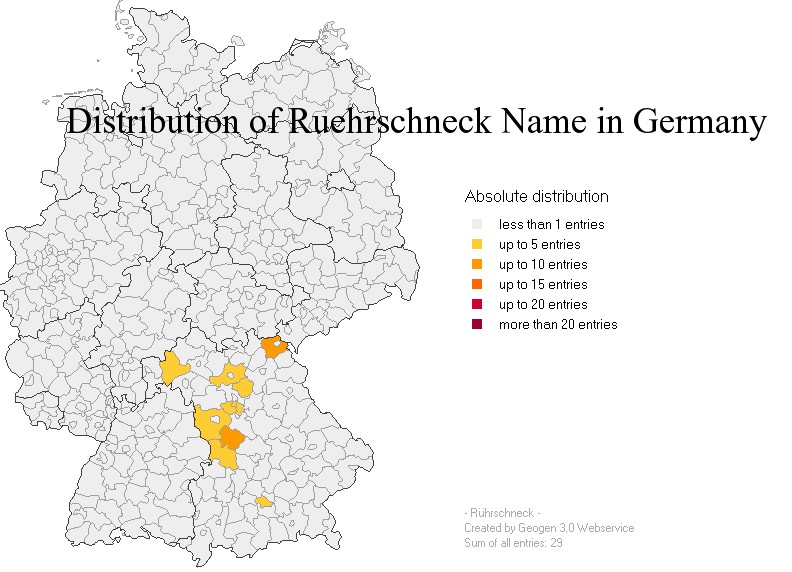
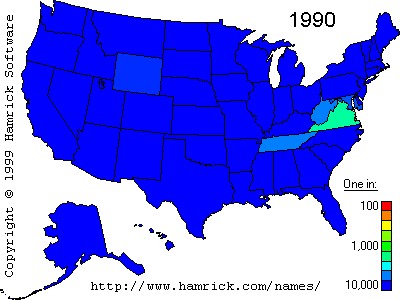
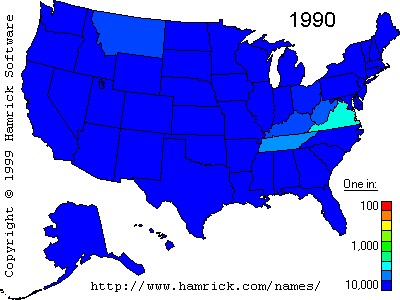
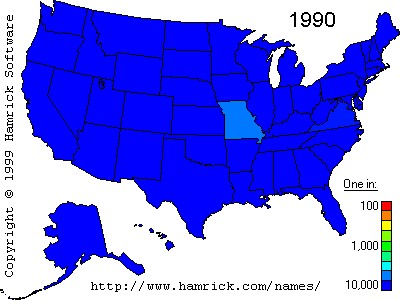
Today in Germany, there are only about 35 families bearing the Ruehrschneck name in a country boasting a population of 83 million. Smaller still is the ultra rare American Ruehrschneck Family, with only a handful of families found in Indiana, Illinois and Pennsylvania using the name.
Add to them the somewhat larger American group of descendants of Johann Jacob Rierschneck, who, as “Jacob Rasnick”, remained here after the Revolutionary War and went on to became the father of SW Virginia’s Rasnake-Rasnick-Rasnic Family, and you will have the basis of the very rare and tiny Ruehrschneck and Rasnick Family of Germany and the United States.
Where We Came From
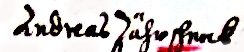
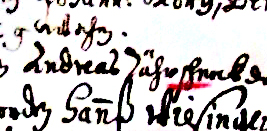
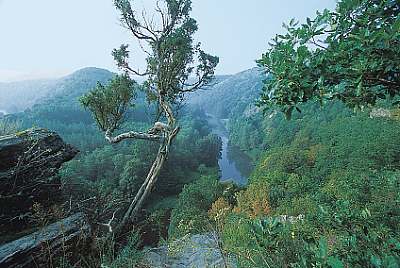
All these branches of the family descend from a single common ancestor, Andreas Rierschneckh, who is the earliest known member of our family. Andreas was born c. 1612 and lived in Austria, northwest of the Donau (Danube) River, in an area called the Waldviertel, which in English is simply the Wooded Quarter.
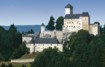
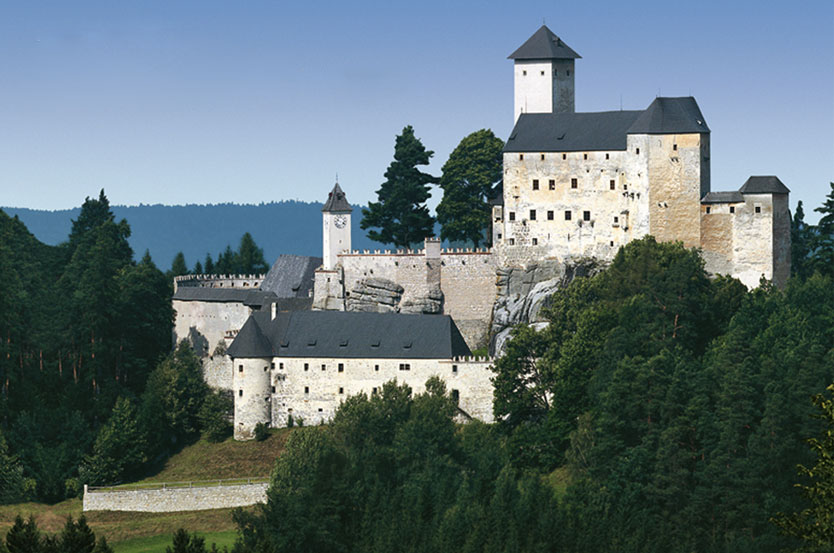
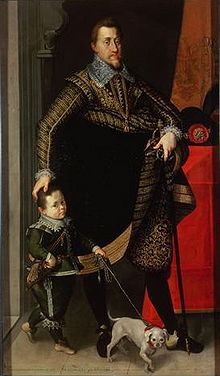
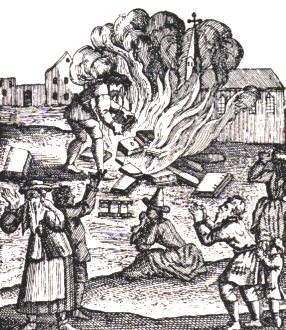
As a small boy Andreas lived under the watchful protection of Rappottenstein’s beautiful medievel castle, but by the time he was six years old, the devastating Thirty Years War (1618-1648) had begun, bringing with it the terror of death, famine and pestilence. Then, in 1627, when Andreas was about fifteen, the loyal Catholic German Emperor Ferdinand II proclaimed an edict declaring all Protestant clergy leave Austrian lands within two weeks. He set up a commission of soldiers who roamed the country closing churches, burning Protestant books, and banishing the evangelic priests. Protestant city officials were replaced by Catholics, Protestant cemeteries were vandalized, and virtually all Protestant records were altered or destroyed.
Thus began the persecution and thirty year eradication of Rappottenstein's almost one hundred percent Protestant population. Thus, too, began the near eradication of the Ruehrschneck Family.
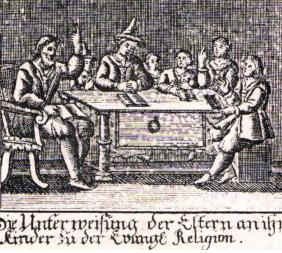
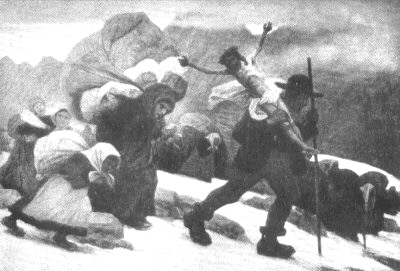
Andreas and the people of the Wooded Quarter lived in constant fear and chaos. At first they were forced to go underground and continue their religious lives in secret at home. They strongly resisted for many years, but were finally overcome with sheer brutal force. In 1652 the Emperor put out an order that those still refusing to become Catholic would be forced to appear before a commission for futher investigation, or opt for emigration. Many sold their farms and homes at a great loss, or secretly left in the middle of the night, leaving all their possessions behind. Families were torn apart when children sixteen years old and younger were forced to stayed behind, as the Catholic clergy believed that they were young enough to be retrained, that is, indoctrinated, into the Catholic religion.
These faithful who were forced to leave the land of their ancestors simply because they refused to denounce their Lutheran religion and convert to Roman Catholicism were called Exulanten, as in exile. In the Waldviertel alone, 20,000 families fled. They were legally and relentlessly hounded with the use of force of arms and mass incarcerations. The giving of shelter to those fleeing was forbidden. In some cases these refugees were beaten by soldiers or robbers, thrown into prison, robbed or sent back home. It also happened that those who were arrested at the border were brutally dragged into a Catholic church, forced to confess and take part in the Holy Communion, supposedly making them become Catholics again.
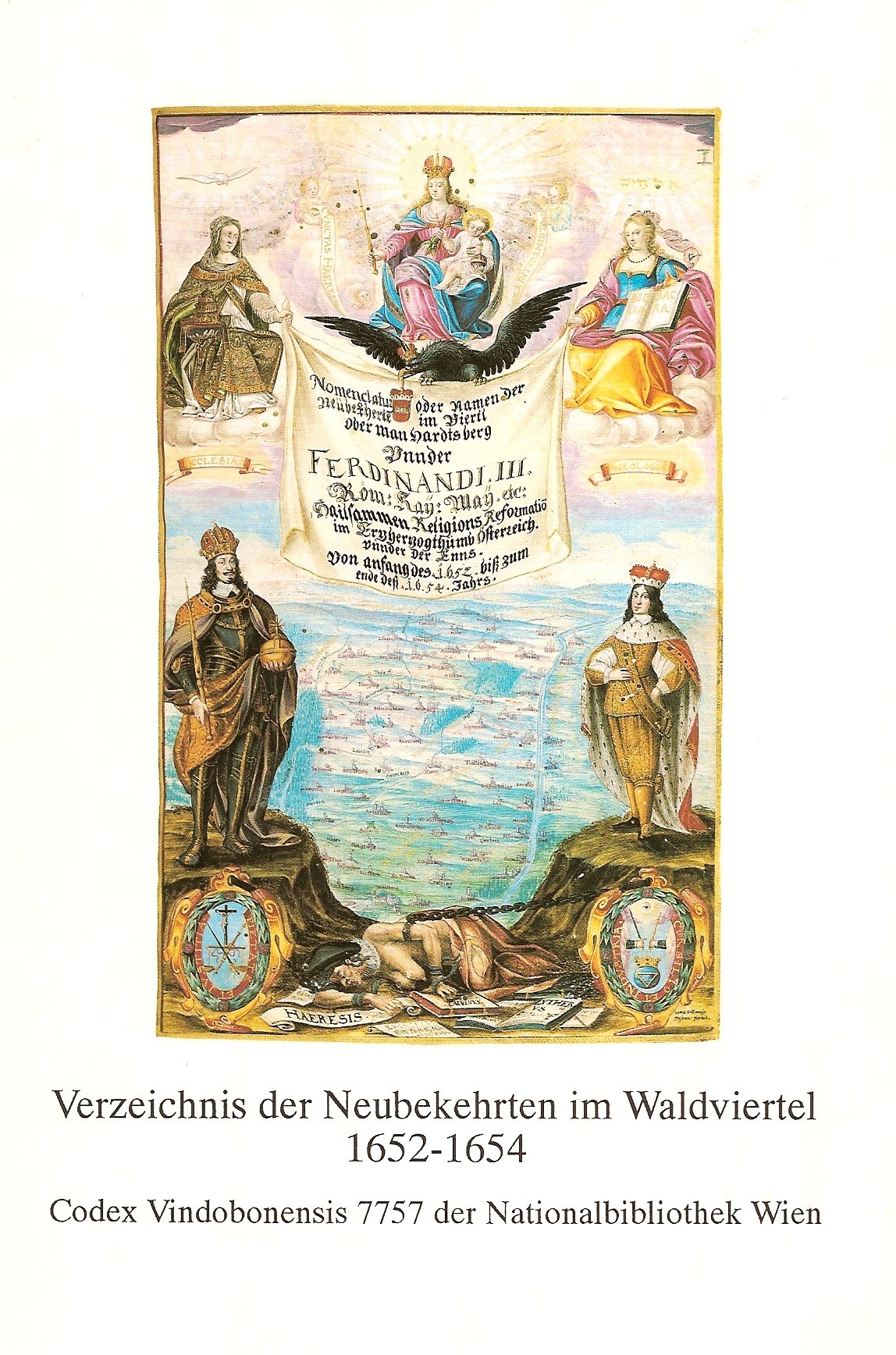
This was the scenario that forty year old Andreas and his wife Magdalena faced when they, too, were forced to leave their homeland in 1652. They are found among those mentioned in a very large list of names from the Waldviertel in the book Verzeichnis der Neubekehrten im Waldviertel 1652-1654 who renounced their Protestant faith and again converted back to Catholicism. This re-conversion was evidently coerced, and in name only, as they show up in Germany in 1653, having children which they christened in the Lutheran church.
Very few records exist from this time period, so it is not known how many others in the family there might have been, but it is known that Andreas is the only one who escaped the persecution and began a new life in Germany.
For the complete history of our family, see Tracking and Connecting the Rierschneckh-Ruehrschneck-Rushneck-Rasnake-Rasnick-Rasnic Family.
|
|